BLOG / HIRING A BUILDER
10 Questions to Ask a Builder Before Hiring Them (UK Homeowner Checklist)
A practical UK homeowner checklist covering experience, insurance, written quotations, payment schedules and contracts — so you can choose your builder with greater confidence.
By Sam Winder · Co-founder of Clearly Built. Practical construction advice to help homeowners understand quotes, plan work and make confident decisions.
· 9-minute read
Questions to Ask Before You Commit
Hiring a builder can feel like a big step, particularly when you’re about to invest a significant amount of money into your home.
Whether you’re planning a renovation, landscaping project, extension or smaller home improvement, choosing the right tradesperson can make all the difference between a well-managed project and a stressful experience.
But how do you know who to trust?
A professional-looking website, a competitive quote or a recommendation from a friend can be reassuring, but none of these tells you everything you need to know.
At Clearly Built, we believe homeowners should feel confident asking questions before agreeing to any construction work.
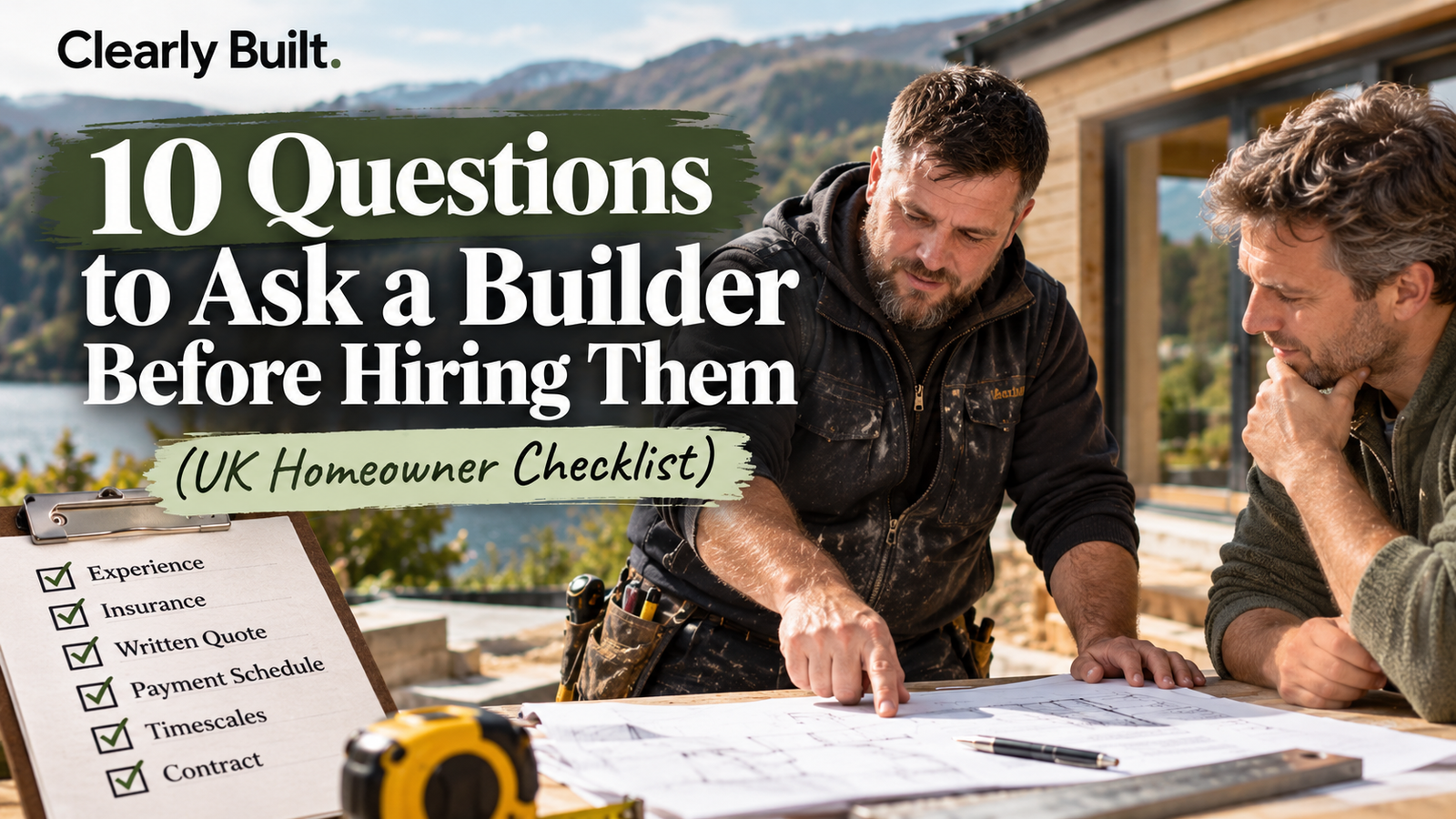
Here are 10 important questions to ask a builder before hiring them, along with what to look out for in their answers.
1. How Long Have You Been Trading, and Have You Completed Similar Projects?
Experience matters, but it’s not simply about how many years someone has been in business.
A builder might have decades of experience in one area of construction but very little experience in the specific work you’re planning.
Ask whether they’ve completed projects of a similar size and complexity to yours.
For example, someone experienced in general property maintenance may not necessarily be the best choice to manage a substantial extension.
What to look for: Relevant examples of previous work, a clear explanation of their experience and confidence discussing how they would approach your project.
2. Can I See Previous Work and Speak to Past Customers?
A reliable builder should be comfortable discussing their previous projects.
Photographs and online reviews are useful starting points, but they don’t always tell the full story.
Where possible, ask for examples of completed work and references from previous customers.
You might ask those customers whether the builder communicated well, handled unexpected problems professionally and completed the agreed work to a satisfactory standard.
What to look for: Genuine examples of completed projects, credible customer feedback and a willingness to provide references where customers have agreed to be contacted.
3. What Insurance Do You Have?
Insurance is one of the most important things to check before allowing construction work to begin.
Depending on the nature of the work, relevant cover may include public liability insurance, employers’ liability insurance and other project-specific policies.
Don’t simply accept a verbal assurance that the builder is insured.
Ask to see evidence of the relevant policies and check that the cover is appropriate for the proposed work.
Remember that insurance requirements vary. For example, employers’ liability insurance is generally legally required where a business employs staff, subject to exemptions. Check the requirements that apply to your location; Northern Ireland has separate legislation.
What to look for: Current insurance documentation, suitable cover for the activities being undertaken and a willingness to explain any limitations.
4. Who Will Actually Be Carrying Out the Work?
The person who visits your property and prepares the quotation might not be the person completing the work.
Some builders employ their own teams, while others rely on subcontractors for specialist tasks.
Neither approach is automatically better, but you should understand who will be involved.
Ask who will be your main point of contact, which trades will attend and who is responsible for coordinating the work.
What to look for: Clear responsibilities, appropriate competence for specialist work and a reliable point of contact throughout the project.
5. Will I Receive a Detailed Written Quotation?
This is one of the most important questions on the list.
A quotation should give you a reasonable understanding of what you’re paying for.
However, not all quotations contain the same level of detail.
One builder might provide a comprehensive breakdown of labour, materials and individual stages of work, while another might simply provide a total figure.
That can make comparing quotations surprisingly difficult.
Ask for a written quotation that clearly identifies the agreed scope, significant materials, exclusions, assumptions and how changes will be priced.
What to look for: A quotation that allows you to understand what’s included and compare competing offers fairly.
For more guidance, read our article on how to check if a builder’s quote is fair.
Alternatively, Clearly Built’s Quote Oversight service can help you review the details before making a commitment.
6. What’s Included in the Price, and What Could Cost Extra?
A low quotation isn’t necessarily a bargain.
Sometimes the difference between two prices comes down to what each contractor has included.
For example, has the builder allowed for waste removal, groundwork, site preparation, finishing materials or unexpected conditions?
It’s also worth understanding whether any items are provisional allowances rather than fixed prices.
Ask what happens if additional work becomes necessary and how you’ll be informed before extra costs are incurred.
What to look for: Clear exclusions, realistic allowances and an agreed process for approving variations in writing.
7. What Payment Schedule Do You Expect?
Payment arrangements should be discussed before work starts.
For larger projects, staged payments may be appropriate, with amounts linked to clearly defined milestones.
Some contractors may reasonably require deposits or advance payments for particular materials.
However, you should understand exactly what each payment covers and when it becomes due.
Be cautious about demands for substantial upfront payments without a clear explanation, written agreement or appropriate safeguards.
What to look for: A written payment schedule, identifiable milestones and a clear record of payments made.
8. When Can You Start, and How Long Will the Project Take?
A realistic timeframe is just as important as a realistic price.
Ask when the builder expects to start, how long the work should take and whether they have other projects running at the same time.
Construction work can be affected by weather, material availability, site conditions and unexpected discoveries.
A good contractor should be able to discuss these possibilities without making unrealistic guarantees.
What to look for: A sensible programme, clear communication and an explanation of how delays will be managed.
9. Who Is Responsible for Permissions, Building Regulations and Inspections?
Depending on your project, you may need planning permission, Building Regulations approval or other permissions.
Not every project requires the same approvals, and planning permission and Building Regulations approval are separate matters.
Before work begins, establish who is responsible for checking the requirements, preparing applications, arranging inspections and providing relevant completion documentation.
For specialist work, ask whether particular registrations or certifications are required.
What to look for: Clearly allocated responsibilities in writing and confirmation that the necessary requirements will be addressed before and during the work.
You can also check guidance through the official Planning Portal for England and Wales. Requirements differ across the UK, so check your local authority’s guidance for your project.
10. What Happens if Something Goes Wrong?
Even well-planned construction projects can encounter disagreements.
The important thing is how those problems are handled.
Ask whether the builder provides a written contract, how concerns should be raised and what process applies if work needs correcting.
You should also establish how changes to the agreed scope will be documented.
A professional contractor should be willing to discuss reasonable procedures for handling problems before they arise.
What to look for: Clear written terms, a practical complaints process and a willingness to communicate openly.
For further advice, read our guide to handling disagreements with your builder without the situation ending in court.
Citizens Advice also explains what to check before getting building work done, including quotations, insurance and written agreements. Choose the advice for your UK nation.
Red Flags to Watch Out for When Hiring a Builder
No single warning sign automatically means a builder is unreliable. However, certain behaviours should encourage you to investigate further.
Be particularly cautious if a contractor:
- Refuses to provide a written quotation or clear scope of work.
- Pressures you to make an immediate decision.
- Cannot explain relevant insurance arrangements.
- Avoids reasonable questions about previous projects.
- Requests unusually large upfront payments without clear justification.
- Won’t explain who is responsible for permissions or inspections.
- Is unwilling to put important agreements in writing.
Trustworthy tradespeople should also benefit from informed customers. Clear expectations and sensible questions help both parties understand what has been agreed.
Your Quick Builder Hiring Checklist
Before agreeing to construction work, make sure you can answer the following:
- Have I checked their relevant experience?
- Have I seen examples of previous work or credible references?
- Have I checked the relevant insurance?
- Do I know who will carry out and coordinate the work?
- Have I received a clear written quotation?
- Do I understand what’s included and excluded?
- Have we agreed a suitable payment schedule?
- Do I understand the expected project timeframe?
- Have responsibilities for permissions and inspections been clarified?
- Is there a written agreement covering changes and disagreements?
If several of these questions remain unanswered, it’s worth resolving them before proceeding.
How Clearly Built Can Help
At Clearly Built, we understand that most homeowners don’t deal with construction projects every day.
You shouldn’t need years of building experience to feel confident making decisions about your own home.
Our independent construction guidance is designed to help you understand quotations, ask the right questions, consider suitable trades and approach your project with greater clarity.
Whether you’re preparing to appoint a builder or managing a project yourself, our Project Oversight service can provide practical advice based on real construction experience.
We also work with tradespeople through our Trade Network, helping connect homeowners with suitable businesses that have been through our onboarding and vetting process.
We provide independent advisory support rather than acting as your building contractor or replacing the responsibilities of qualified designers, inspectors or other appointed professionals.
Related Homeowner Guides
- How to check if a builder’s quote is fair
- How to handle a disagreement with your builder
- Why are building costs so high? Material and labour breakdown
This article provides general guidance for UK homeowners. Specific contractual obligations, statutory requirements and approval processes depend on the project and its location.
Not Sure What Questions You Should Be Asking?
Every construction project is different, and sometimes the most useful question is the one you haven’t thought to ask.
If you’re preparing to hire a builder and would like a second opinion, get in touch with Clearly Built.
Your first 20-minute conversation is free.
Clearly Built — Know before you build.